The rise of football in West Africa: from street pitches to international stardom
Football in West Africa is far more than just a sport. It is a lifestyle, a social force, and for millions of young people, a dream of a better future. In cities and villages across Senegal, Nigeria, Ghana, and Côte d’Ivoire, football is played everywhere — on dusty streets, schoolyards, beaches, and open fields. What started as a simple game brought by colonizers has grown into one of the most powerful football regions in the world.
Today, West African players are stars in Europe’s top leagues, and national teams from the region regularly compete at the highest international level. The journey from street football to global recognition is a story of passion, struggle, talent, and transformation.
How football first took root in West Africa
Colonial influence and the birth of local clubs
Football arrived in West Africa at the end of the 19th century through British and French colonial administrations. At first, the game was played mainly by soldiers, students, and officials in major port cities like Dakar, Lagos, and Accra. Early football clubs were formed around schools, military bases, and trading hubs.
What made football spread so quickly was its simplicity. You didn’t need much to play — just a ball and an open space. Local communities quickly adopted the game, and informal street matches became a daily routine for young boys across the region. Over time, organized competitions began to appear, laying the foundation for national leagues.
Independence and football as a symbol of identity
After gaining independence in the 1950s and 1960s, many West African nations embraced football as a symbol of unity and pride. National teams became a source of collective identity, and victories on the pitch were seen as victories for the entire country.
The Africa Cup of Nations played a key role in shaping regional competition and raising the standard of play. Stadiums filled with passionate fans, and football heroes became national icons.
Street football and the making of elite players
Why the streets create special talent
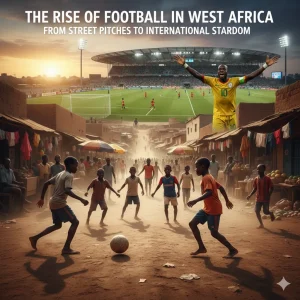
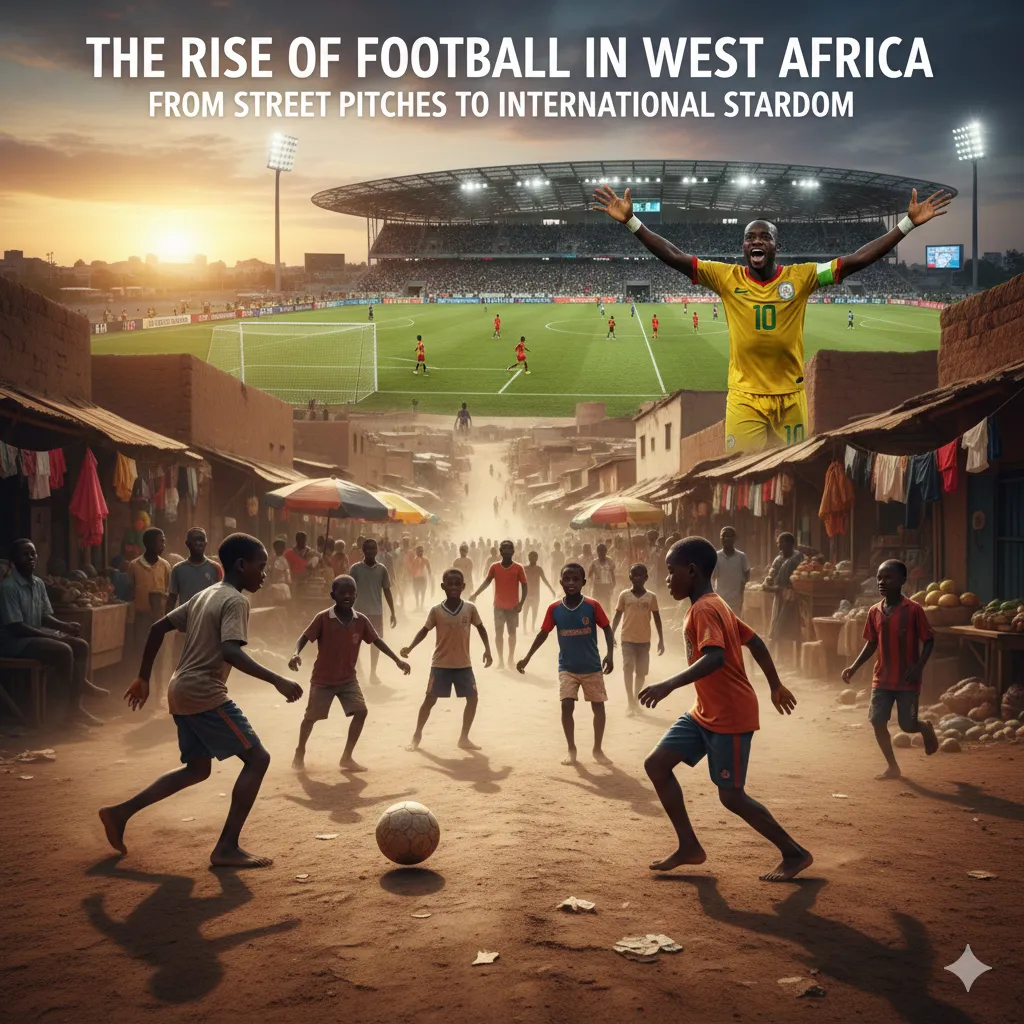
One of the main reasons West Africa produces so many outstanding footballers is its street football culture. Many players grow up playing in difficult conditions — uneven ground, small spaces, no proper boots, and intense competition. These environments force young players to rely on instinct, creativity, and quick thinking.
Street football helps develop:
- Exceptional ball control
- Speed and agility
- Strong decision-making under pressure
- Confidence in one-on-one situations
This type of football naturally creates attacking, expressive players. Legends like Sadio Mané, Didier Drogba, and Jay-Jay Okocha all started their careers in exactly these conditions.
The rise of academies and structured training
In the last two decades, West African football has seen a rapid rise in professional youth academies. These institutions combine raw street talent with modern coaching methods, tactical education, and physical conditioning.
Senegal has become one of the leaders in youth development. Well-organized academies now serve as a direct bridge between grassroots football and professional careers abroad. Many young players move from local academies straight into European clubs, fully prepared for the physical and mental demands of elite football.
The European connection and global recognition
Scouting networks and talent export
European clubs now view West Africa as one of their most important scouting regions. France, in particular, has strong historical and footballing connections with West African nations. Every year, dozens of players leave local leagues for academies and professional teams in Europe.
Senegal alone has produced world-class players such as:
- Sadio Mané
- Kalidou Koulibaly
- Idrissa Gana Gueye
- Édouard Mendy
These players compete at the highest level of world football and represent their country with pride on the international stage.
World Cup moments that changed perception
West African teams have delivered some of the most unforgettable moments in World Cup history. Senegal stunned the world in 2002 by defeating defending champions France and reaching the quarterfinals. Ghana came agonizingly close to the semifinals in 2010, losing on penalties in one of the most dramatic matches ever played.
These performances changed how the world sees African football — not as underdogs, but as serious competitors with speed, power, and technical skill.
Senegal as a modern football powerhouse
Professional management and tactical evolution
Senegal’s rise has not been accidental. Over the last 15–20 years, the country has invested heavily in structure, coaching education, and player development. This long-term approach paid off when Senegal won the Africa Cup of Nations in 2021, confirming its status as one of the strongest teams on the continent.
The modern Senegalese team combines physical strength, tactical discipline, and individual creativity — a perfect reflection of how West African football has evolved.
Fans, technology, and the digital football economy
Football in Senegal is followed with intense passion. With the spread of smartphones and internet access, fans now follow matches, players, and statistics in real time. Social media, streaming platforms, and mobile apps have completely changed the way supporters experience the game.
Another growing part of the football ecosystem is online sports betting. Many fans use platforms like 1xbet in Senegal to engage more deeply with both local matches and international competitions. For many supporters, this adds an extra layer of excitement and analysis to every game.
The social and economic impact of football
Football as a way out of poverty
For a huge number of young people in West Africa, football represents a real chance to escape poverty. A single professional contract can change the future of an entire family. Successful players often invest in their hometowns by building schools, funding academies, or supporting community projects.
Their success creates role models for the next generation, showing that hard work and discipline can lead to international success.
A growing football economy
Football also creates thousands of jobs beyond the pitch — coaches, doctors, journalists, photographers, content creators, and event organizers all benefit from the growth of the game. Match days support local businesses, transport services, food vendors, and security companies.
In recent years, the digital side of football — online media, streaming, and betting — has become a powerful economic engine across the region.
Challenges that still remain
Infrastructure and organization
Despite huge progress, many countries still struggle with outdated stadiums, unstable financing of domestic leagues, and problems with governance. Poor organization can slow down the development of local competitions and discourage investors.
Early player migration
Another problem is the early migration of young players to Europe. While this creates opportunity, it also carries serious risks. Not every player succeeds, and some are left without contracts or support. Building strong domestic leagues remains an important long-term goal.
What the future of West African football looks like
Data, science, and modern training
West African football is slowly embracing modern football technology. GPS tracking, video analysis, sports science, and performance data are now entering youth academies and professional clubs. This allows players to develop more safely and efficiently.
Women’s football on the rise
Women’s football is also growing rapidly across the region. National teams are gaining international experience, and more investment is flowing into women’s leagues. This is opening new opportunities for female athletes and changing social attitudes toward women in sport.
Why this story is still being written
The story of football in West Africa is not finished — in fact, it is only gaining momentum. Every year, new talents emerge from streets, schools, and academies, dreaming of stadiums filled with cheering fans. Senegal and its neighbors are no longer just exporters of raw talent; they are becoming true football systems with identity, structure, and global influence.
From dusty street pitches to Champions League nights, West African football continues to prove that talent, discipline, and passion can break any barrier. And the next global superstar might already be playing barefoot somewhere right now.